
There’s something magical about watching a plant grow from a single seed. One moment, it’s this tiny, innocuous object; the next, it’s sprouting, growing, and maturing. It’s hard not to see parallels with my students.
But it’s not just a metaphor. Students always enjoy getting involved with plant experiments. It’s fun, messy, and miraculous. It’s science in action.
Learning about growth and changes in plants? Well, there’s no better way than seeing it happen in real life. You can perform the plants experiments for kids with anything that grows from a seed. I always use sunflower seeds or bean seeds – both grow quickly and easily, reducing the risk of disappointment.
The best part? Once they’ve finished the experiment, the students can take these plants home at the end of the unit! Let’s take a closer look at some plants experiments for kids.
5 Plants Experiments for Kids
Experiment 1: What Do Plants Really Need?
This classic setup is perfect for teaching students about the essential conditions for plant growth. You’ll need four identical seeds and four small pots. Set up each one with a different combination of sun, soil, and water:
- Plant A: Soil and water, but no sunlight (store in a dark cupboard)
- Plant B: Soil and sunlight, but no water
- Plant C: Sunlight and water, but no soil (try cotton wool instead)
- Plant D: Sunlight, soil, and water — the control group
Have your students make daily observations and compare the growth and changes in plants as seedling develops over the course of one to two weeks. The goal is to see which plant thrives and which ones struggle or fail to grow.
Interestingly, students are often surprised that the seed kept in the dark will still sprout, at least for a little while. Without sunlight, though, it will quickly become pale and weak. It’s a powerful visual to help kids understand how different environmental factors affect the growth and changes in plants.
Experiment 2: Watching Seeds Germinate Up Close
This is one of the simplest and most rewarding plant science experiments for kids — and it works particularly well when teaching about germination. All you need is a ziplock bag, a damp paper towel, and a few seeds (try using different types such as beans, peas, or sunflower seeds).
Lay the wet paper towel flat inside the bag, then place a seed between the towel and the inner wall of the bag so it’s visible from the outside. Seal the bag and tape it to a sunny window.
Over the next few days, students will be able to watch the magic unfold. The seed absorbs water, swells, and begins to split. Roots begin to grow downward, followed by the shoot reaching upward. Because there’s no soil, kids can see every stage of development with complete clarity, making this a brilliant hands-on way to explore the life cycle of a plant.
Experiment 3: How Do Plants Drink Water?
This colourful experiment helps children understand how water moves through a plant. It’s a great visual demonstration of capillary action and transpiration — two key processes in plant biology.
You’ll need:
- Celery stalks with leafy tops (or white flowers like carnations)
- Clear plastic cups
- Water
- Food colouring (use a variety)
Fill each cup with water and add a few drops of food colouring. Then, place one celery stalk or flower in each cup and leave them undisturbed for several hours, or overnight for stronger results.
Soon, students will notice coloured streaks moving up the stalks and into the leaves or petals. This shows how water travels from the roots to other parts of the plant. The different colours help students visualise just how plants “drink” and transport nutrients — a vivid, memorable way to explore growth and changes in plants.
Experiment 4: Do Plants Breathe?
We all know that humans breathe, but what about plants? This simple experiment reveals that plants also “exhale” in their own way, releasing water vapour through a process called transpiration.
Here’s what you’ll need:
- A leafy plant (a houseplant or potted outdoor plant works well)
- A large clear plastic bag
- An elastic band
Cover part of the plant (ideally a leafy section) with the bag and secure it loosely using the elastic band. Then place the plant in a sunny spot and leave it for a few hours.
When you return, you should see tiny droplets of water on the inside of the bag. This is water vapour released by the plant as it “breathes” — the same way we release moisture when we exhale. It’s a great experiment for helping kids make real-world connections between plant functions and human biology.
Experiment 5: Plants Seeking Light (Phototropism)
This one is a bit more hands-on, but it’s a fantastic way to explore how plants respond to their environment, particularly light. It also ties into the curriculum concept of adaptation.
You’ll need:
- A shoebox with a lid
- Cardboard pieces (to make a simple maze inside)
- A small potted plant or fast-growing seedling
- Tape or glue
- Scissors or a box cutter (for adult use)
Cut a small hole in one side of the shoebox near the top — this will be the only light source. Inside, create a simple maze with cardboard walls and barriers. Then place your plant at the opposite end of the box from the hole.
Close the lid and place the box in a well-lit area with the hole facing the light source. Over the next several days, open the box occasionally and observe the plant’s progress. You’ll see it bending and growing toward the light, even as it navigates around obstacles.
This experiment is a brilliant demonstration of phototropism — the way plants grow and stretch in response to light. It’s also a great conversation starter about how plants survive and adapt in the wild.
Check out: 4 Experiments for Your Soil Science Unit
Take It Further: Ready-Made Plant Science Unit
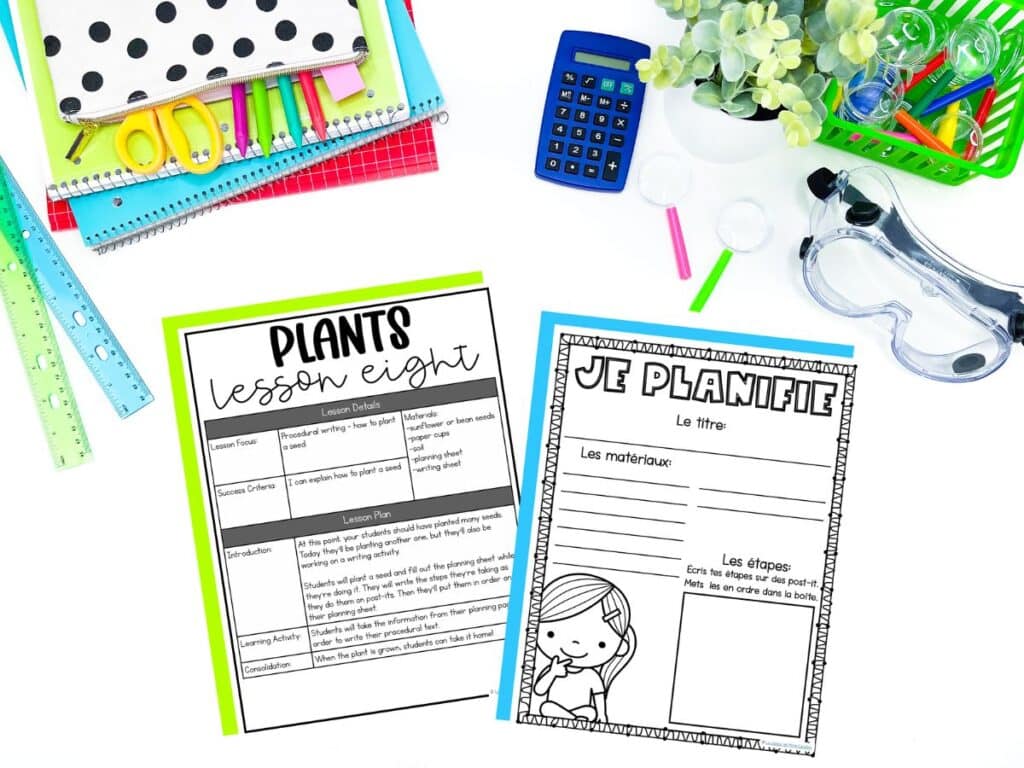
Want to go beyond experiments? My full unit is aligned with the 2022 Ontario Science Curriculum and includes:
- Print-and-go lesson plans
- Worksheets and assessments
- Hands-on experiments
- Coding activities
It’s everything you need to teach growth and changes in plants — no prep required.
See more science posts for more experiment ideas, book suggestions, and how to make your lessons even more engaging.
Want to check out the resources listed?
All the links above lead to TPT, but the resources are also available on our website. Here are the resources available here for purchase in CAD. Don’t forget you can also buy credits for an additional discount (up to $15 off).
Recommended products
-
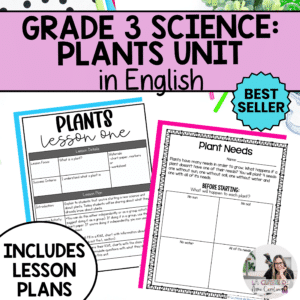
Growth and Changes in Plants Science Unit for Grade 3 – in ENGLISH
$ 13.50 -
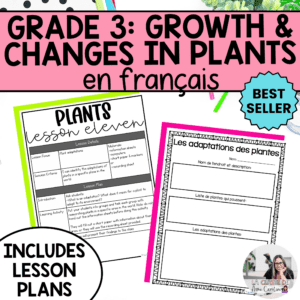
Growth and Changes in Plants Science Unit in FRENCH for Grade 3 – Les plantes: changements et croissance
$ 13.50 -
Grade 3 Science Unit Bundle in ENGLISH | Soil, Structures, Forces and Plants
Original price was: $ 54.00.$ 45.00Current price is: $ 45.00. -
Grade 3 Science Unit Bundle Based on the Ontario Science Curriculum
Original price was: $ 54.00.$ 45.00Current price is: $ 45.00.