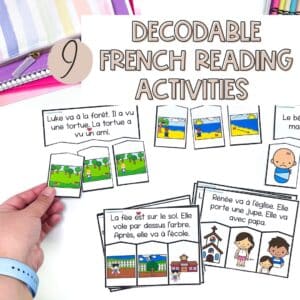
If you’ve been hunting for decodable French reading resources that actually work with your scope and sequence, you’re in the right place. Whether you’re introducing decoding strategies in grade 1 or reviewing phonics with your grade 2s, these activities are designed to be clear, effective, and classroom-ready.
I’ve included everything from French phonics activities to reading fluency games, and even a few favourites that get students out of their seats and actually reading (not just guessing). Most of these were built for centres, small-group work, or independent review – perfect for supporting your existing program without reinventing the wheel.
These are the exact French reading activities and decoding games I’ve used in my own class, especially with early readers and immersion learners.
Read More: How to Use French Decodable Readers
1. Literacy Centres
If your students already know their letter sounds and accents, these literacy centre activities are a great next step. The words are simple, mostly decodable, and only include common high-frequency terms like et. No tricky spellings to trip them up.
You can run them during your centre block or use them in small-group instruction. I usually pull these out during guided reading. It’s a great way to reinforce what we’re working on without needing to prep a whole new activity.
Perfect for grade 1 and early grade 2 review.
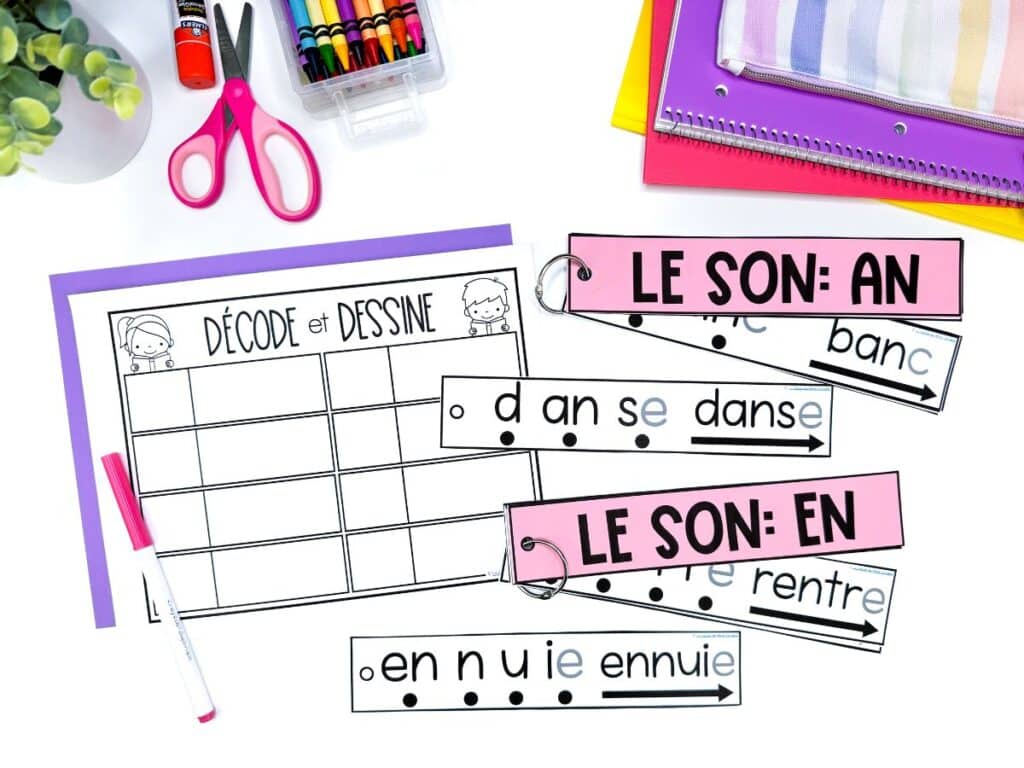
2. Decoding Strips
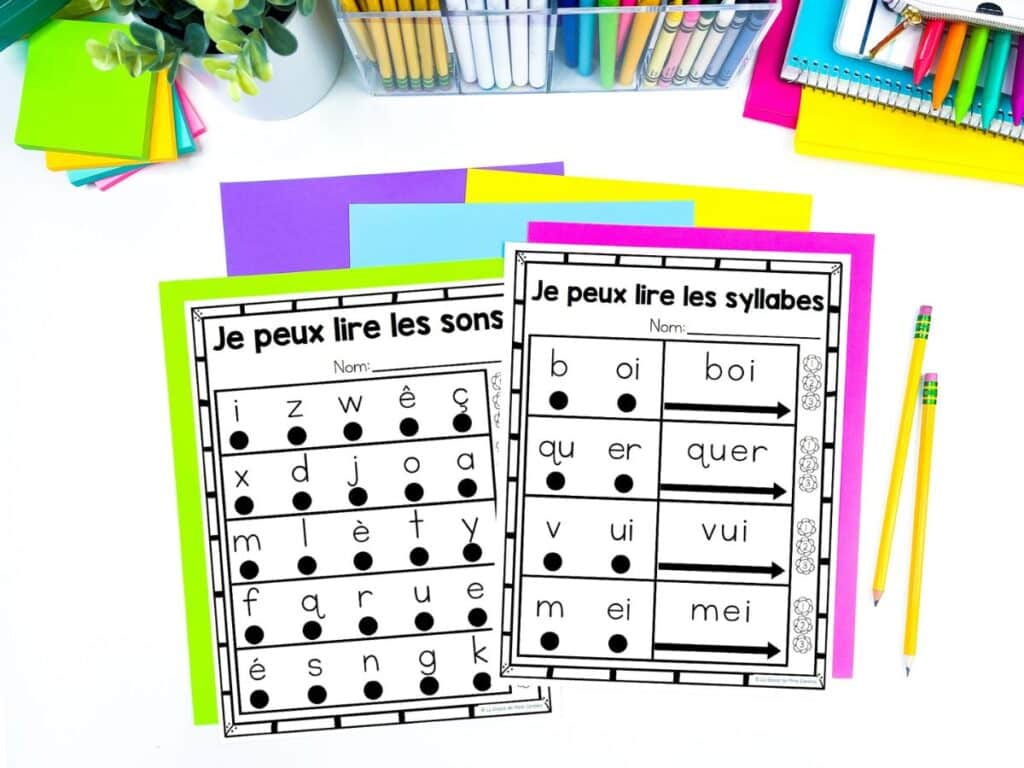
These are hands-down one of the most effective tools for building decoding confidence. Each set targets five specific sounds, starting with simple patterns and gradually introducing more complexity.
What makes them so useful is the structure: Part 1 focuses on individual sounds, while Part 2 includes mixed review from previous sets, all mapped to a clear phonics scope and sequence (which you can download for free if you don’t have it already).
These are low-prep, high-impact, and super easy to differentiate. Ideal for grade 1, but I’ve used them for grade 2 intervention as well. They’re great as a warm-up or early finisher task, and they slot easily into your existing French phonics activities.
3. Phonics Mega Bundle
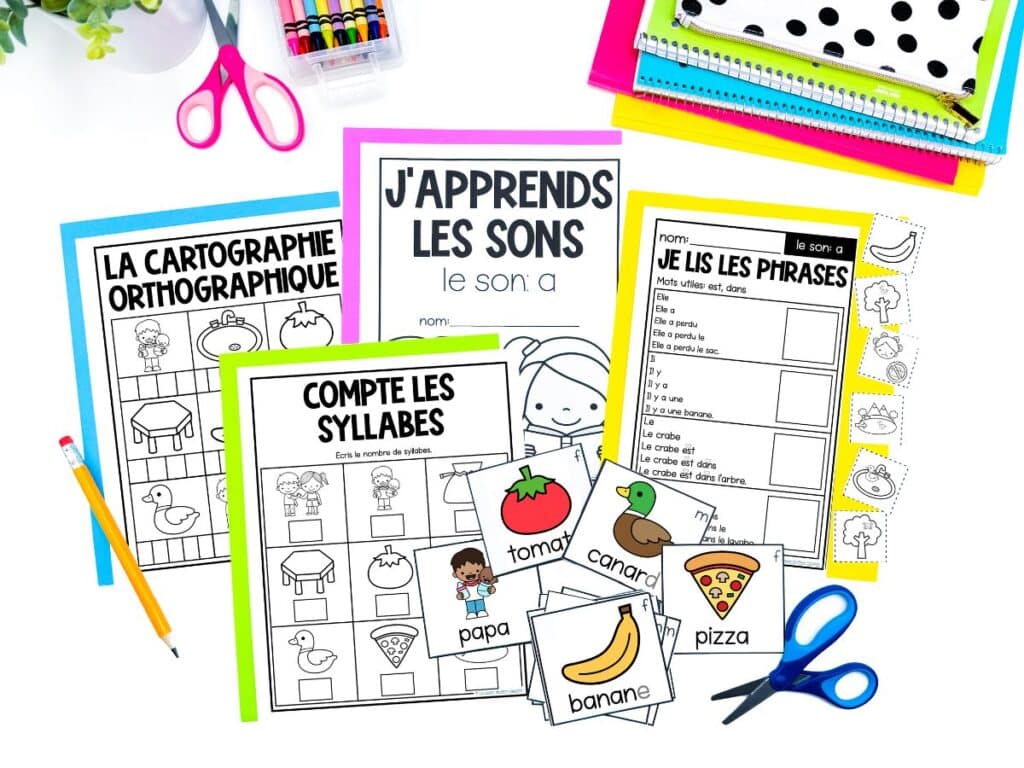
This is my best-selling resource for a reason. While it’s not strictly a reading tool, explicit phonics instruction is key to helping students decode more efficiently, and this bundle covers it all.
You’ll find a mix of hands-on and reading-focused activities: reading passages, “read the sentence and match the photo,” sentence pyramids, and more. It’s all built to support strong decoding, fluency, and comprehension in one place.
Best suited for grades 1–3, especially if you’re working with a wide range of reading levels.
You can use parts of the bundle during your French games vocabulary sessions or whole-class instruction; it’s flexible enough to support how you teach.
4. Sentence Pyramids
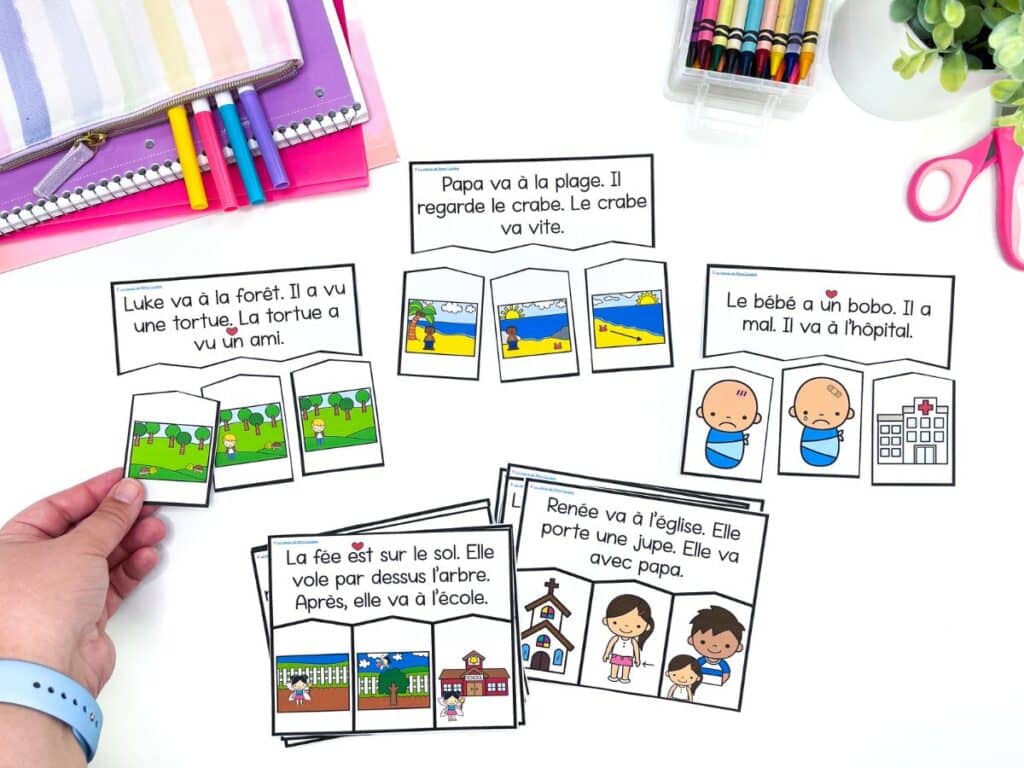
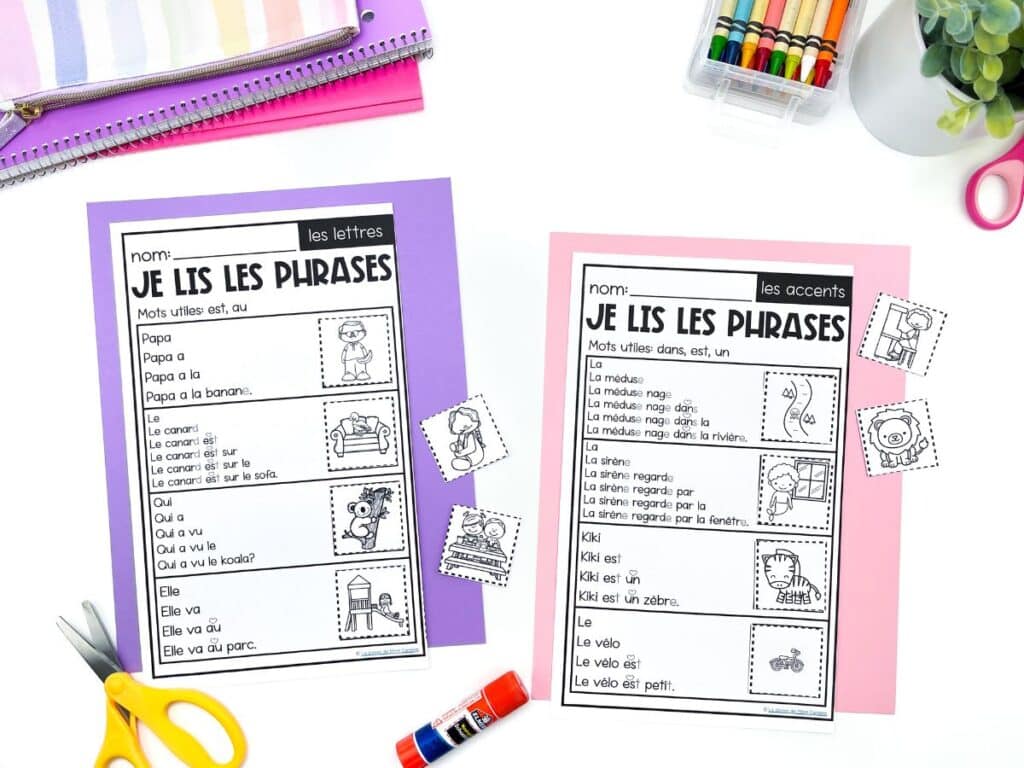
Sentence pyramids are a great way to build fluency, especially for early readers who need repetition without getting bored.
Students read one line at a time, each line adding a new word until they’re reading the full sentence. Afterwards, they complete a cut-and-paste comprehension task, matching the correct picture to the sentence. Since there are extra photos, they actually have to understand what they’ve read.
Try pairing students up to read aloud together, fluency grows when they hear themselves read.
Ideal for grades 1–2, this simple French reading activity helps early learners build fluency while reinforcing word order and comprehension.
5. Decodable Reading Passages Bundle
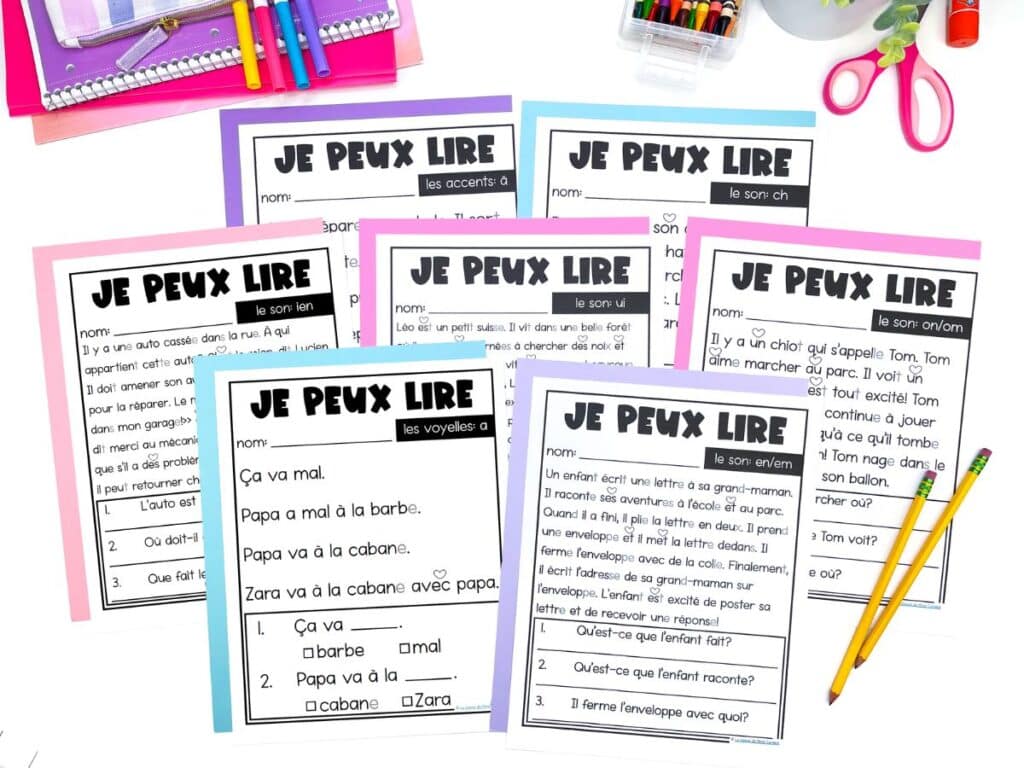
This one’s a game-changer for building confidence. The decodable passages are designed to get progressively harder, so students only encounter sounds they’ve already learned: no nasty surprises mid-sentence.
Each sound comes with five passages and a set of differentiated comprehension questions. The texts are short, manageable, and great for small groups or independent work.
It’s one of the most reliable tools I use to teach decoding in French through structured reading. With over 150 passages included, you’ve got plenty to work with from grade 1 through grade 4.
6. Write the Room
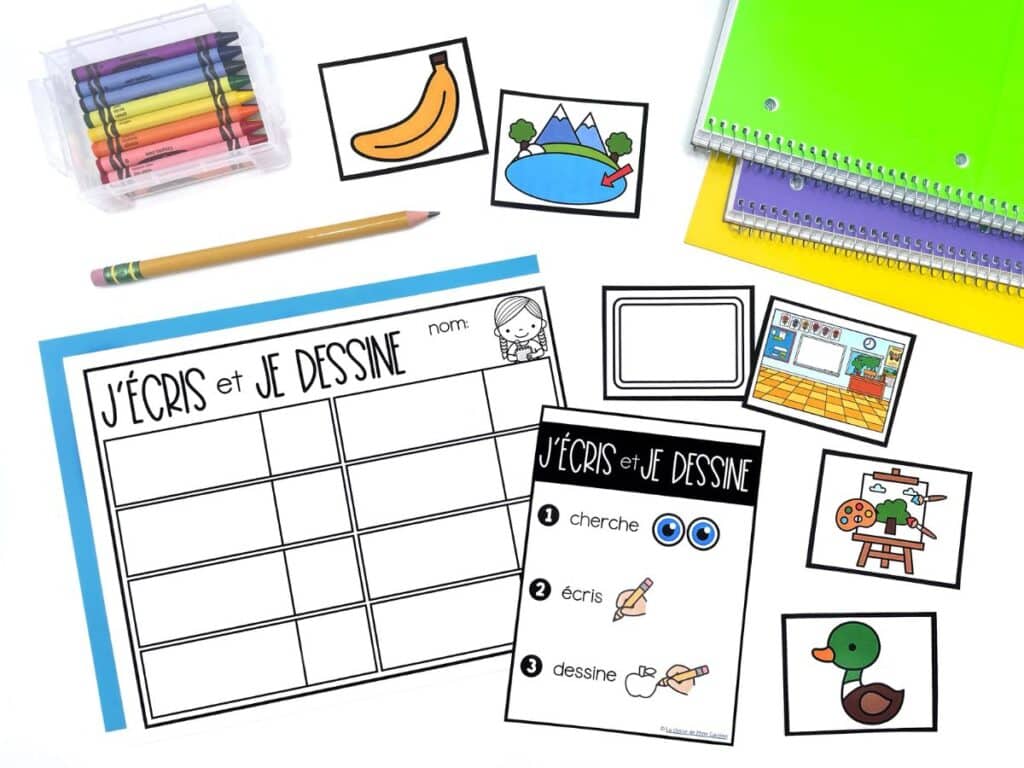
Want something a bit more active? Write the Room is always a hit. It’s a simple setup—either post pictures and have students practise spelling, or post words and have them practise reading.
The twist? They can’t just copy. They also have to draw a picture of the word, so you’ll know instantly whether they’ve decoded it or not. Movement + literacy = win.
Great for grade 1, or as a beginning-of-year review in grade 2. This is a brilliant example of how to learn French with games. It combines movement, vocabulary recall, and decoding all in one.
7. Trouvé: Nonsense Word Game
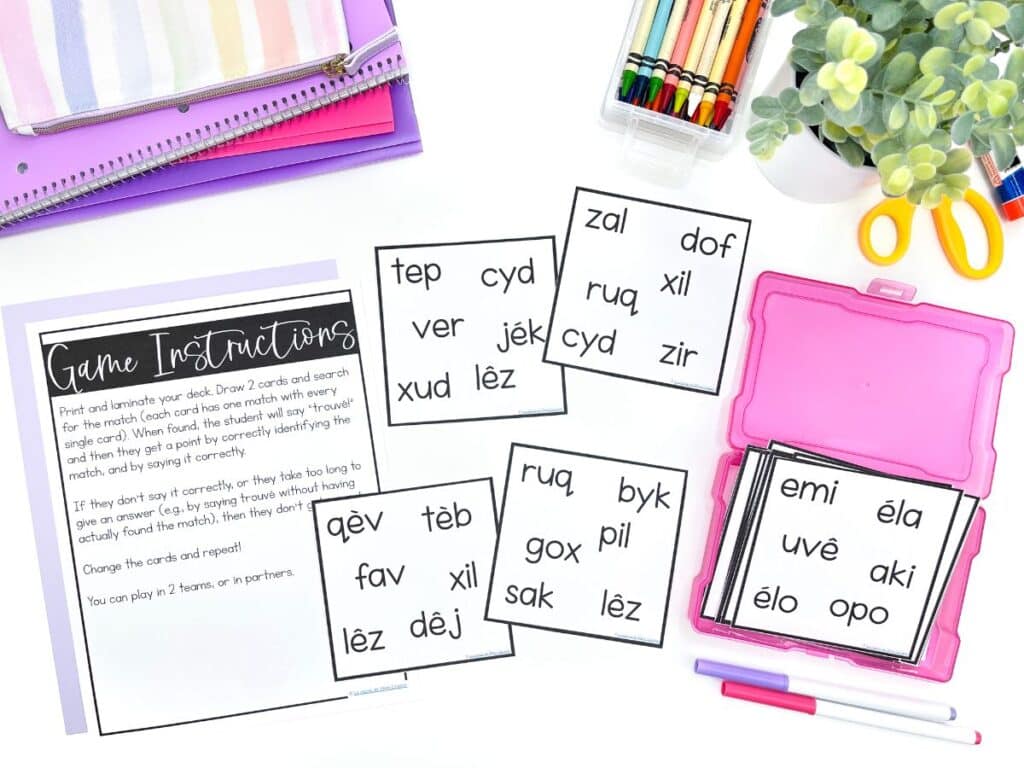
This group game is perfect for practicing real decoding: no memorisation, no sight words, just phonics.
Each student gets a game card. They race to find a match with their partner and shout “trouvé!” when they find it. But here’s the key: the words are nonsense. That means students have to sound them out—they can’t rely on visual memory or vocabulary knowledge.
Fast-paced, easy to set up, and great for grade 1 or as a review in grade 2.
8. Decodable Reading Pages
Another best-seller. These 75 decodable pages walk students through everything from single letter sounds to complex spellings, blends, and full sentences.
They’re especially useful if you’re working with students at very different levels. Whether you’re supporting immersion learners or helping students learn French for the first time, this resource makes it easy to start where they’re at and progress with confidence.
I recommend this for grades 1–2.
9. Nonsense Word Game Bundle
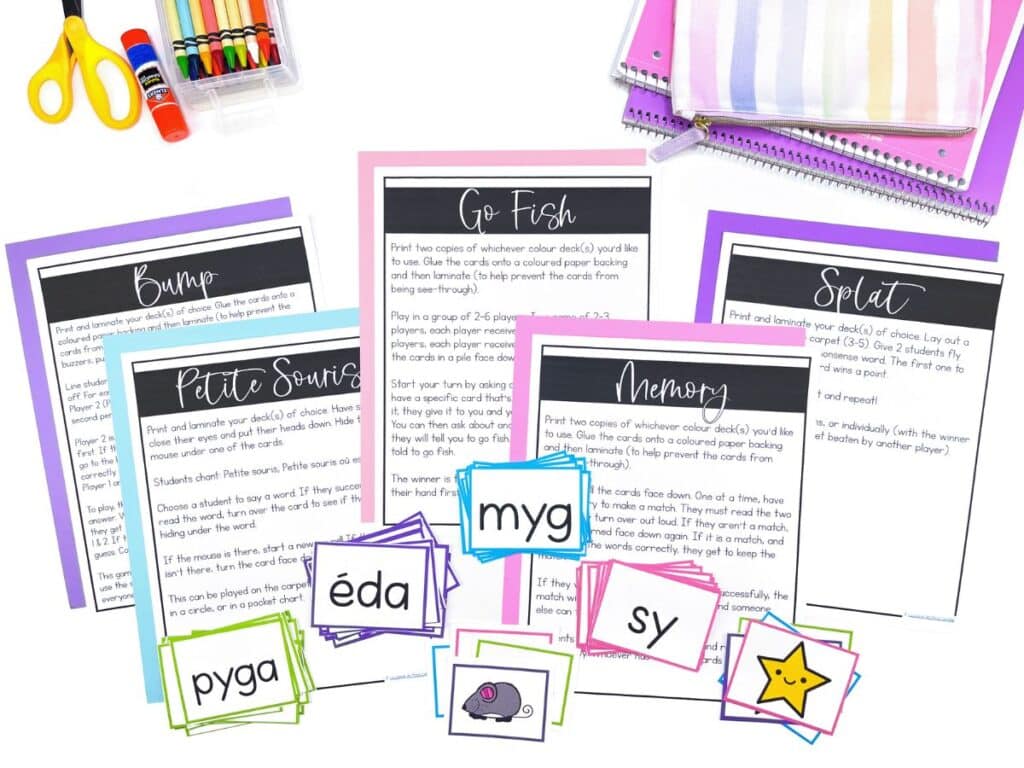
This bundle comes with four sets of nonsense word cards, each one focusing on a different level of difficulty:
- Consonant-Vowel words (e.g., fy)
- Consonant-Vowel-Consonant words (e.g., pac)
- Vowel-Consonant-Vowel words (e.g., ito)
- Consonant-Vowel-Consonant-Vowel words (e.g., romu)
You can play five different games with them: Splat, Memory, Go Fish, Petite Souris, où es-tu?, and Bump. Each one gives students decoding practice without relying on known vocabulary. They have to read what’s there, not what they think should be there.
These French decoding games are ideal for reinforcing sound recognition, especially when you need a no-prep option for small groups. It’s a fun way to build phonics skills, and it never feels like a worksheet.
Want to check out the resources listed?
All the links above lead to TPT, but the resources are also available on our website. Here are the resources available here for purchase in CAD. Don’t forget you can also buy credits for an additional discount (up to $15 off).